Encryption keys you hold
Turn it on and every message is encrypted to your key as it arrives (OpenPGP or S/MIME). We store text we cannot read. Your private key never reaches us.
Why: a break-in or a curious administrator should not be able to read your mail. Worth knowing before you turn it on: subjects and addresses stay readable, because that is how encrypted mail works.
AI you choose the model for
Sorting and draft replies run on a model you pick: one on your own hardware, or your own account with a provider. In browser-direct mode the request goes from your browser to your model and never through us.
Why: AI should not mean handing your inbox to a company you did not choose. It is off until you configure it, and a draft is never sent for you.
Set up to prove your mail is yours
Your mail is signed and published so receivers can check it really came from you (DKIM, SPF, DMARC and ARC), and travels encrypted between servers (MTA-STS and DANE). It is configured for you, not left as homework.
Why: getting this wrong is the usual reason mail lands in spam. Getting it right is necessary but not sufficient — see
what we can and cannot promise about reaching the inbox.
We can run your DNS
Point your domain's nameservers at ZephyrAB. We then create, sign and keep up to date every record mail needs — MX, SPF, DKIM, DMARC, MTA-STS, DANE, and the records mail apps read to configure themselves.
Why: hand-editing DNS is where most mail setups go wrong. Two things stay at your registrar: pointing the nameservers at us, and one DS record if you want DNSSEC checked.
Big files go as links
An attachment over the size you set becomes a download link instead. A link can have a password, expires on its own, can be revoked, and records every download attempt.
Why: large attachments bounce, fill up mailboxes and get blocked. A link arrives. Signed or encrypted mail is left alone, because rewriting it would break the signature.
Stolen accounts get locked
Outgoing mail is scanned for malware. An account that suddenly sends far more than it should is locked automatically, before it can do damage.
Why: one stolen password can get a whole platform blocklisted, so the lock cannot wait for someone to notice. Guided clean-up and a staged return to full sending rate are still being built.
Move in without losing anything
Import from any IMAP server — Gmail, Microsoft 365, mailcow, Dovecot — including the ones that need OAuth. Every message, flag and folder comes across. A second pass then re-reads both servers and compares them message by message, so the copy is checked rather than assumed. Your old mailbox is only ever read, and the import is slowed down so that server stays usable.
Why: people stay with a provider they have outgrown because they are afraid of losing ten years of mail. While you decide, we can deliver to both systems at once, and switch back if you change your mind.
Calendar and contacts
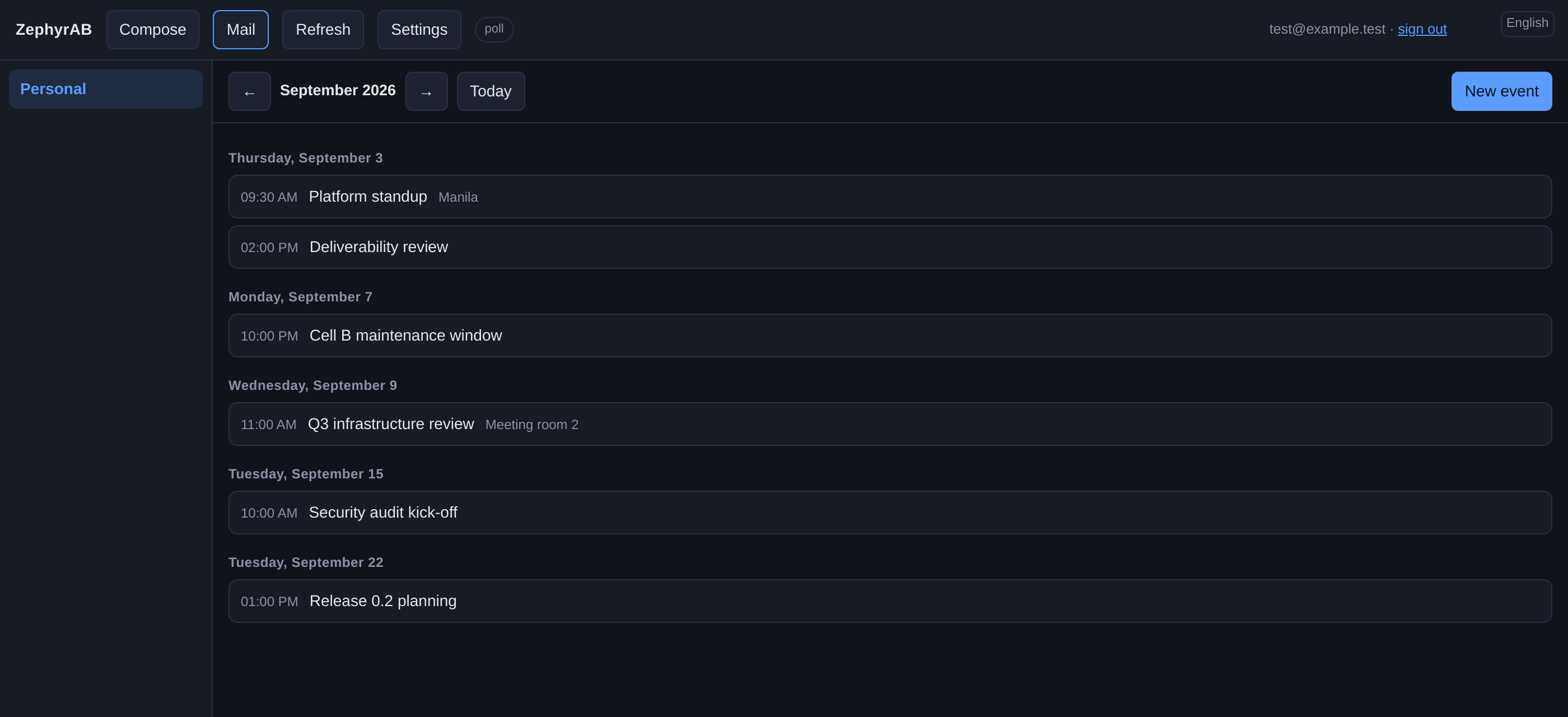
Calendars and address books over CalDAV and CardDAV, so Apple Calendar, Thunderbird and Android apps connect without a plugin. Meeting invitations work both ways with Google, Microsoft and Apple.
Why: mail does not live alone, and open standards mean your calendar is not stuck inside one company's app. Sharing a calendar with a colleague, and a files area, are not built yet.
Grows by adding hardware
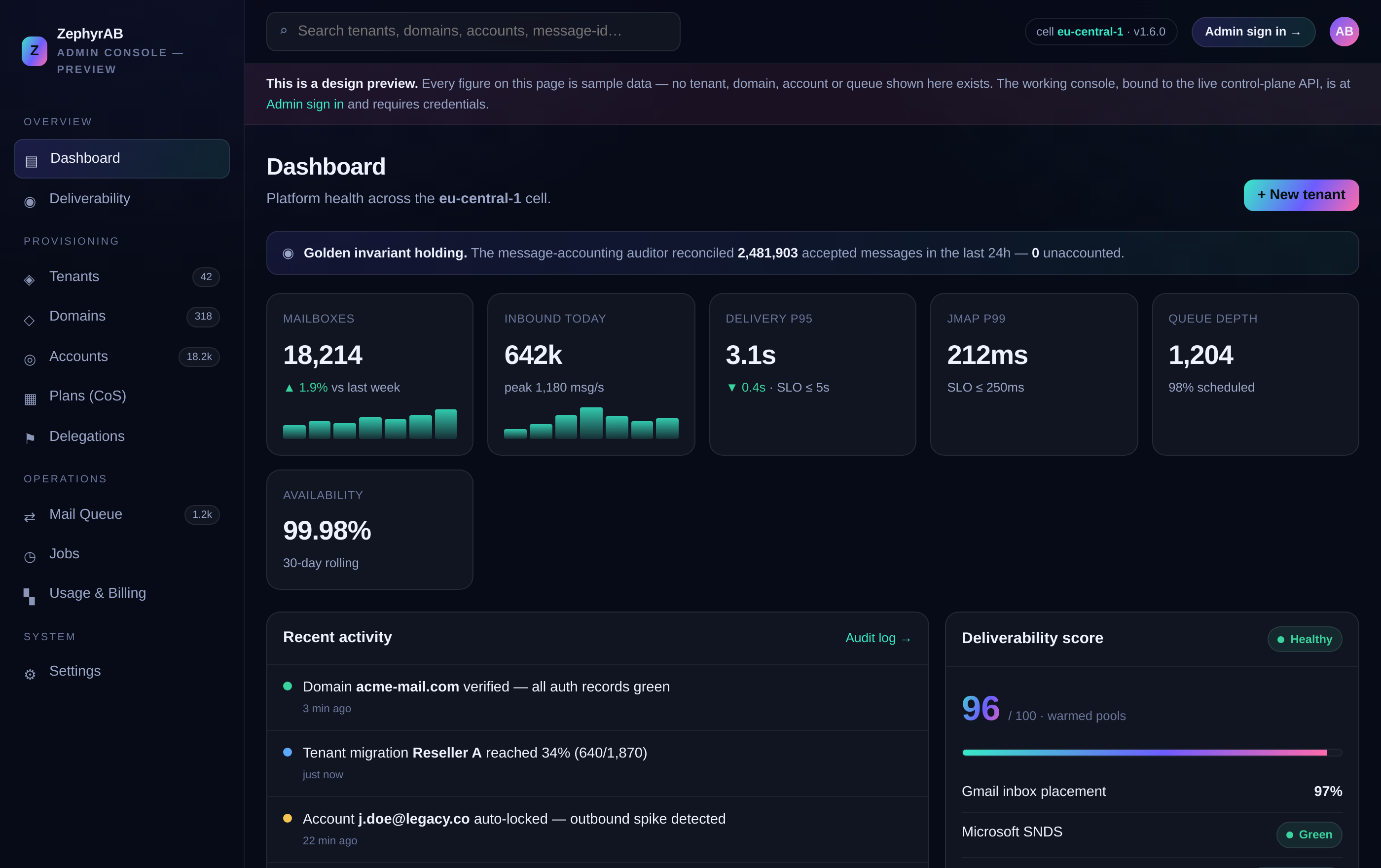
Capacity comes in units called cells. You add a cell rather than re-tune the one you have. One cell has been tested holding a million mailboxes and 1,900 messages a second for a day.
Why: platforms that cannot grow hit a wall and get rewritten. Ten million mailboxes is the design ceiling; one million is what has actually been measured, and the roadmap keeps the two apart.